A PERSONAL COLLECTION / 01
Art &Philosophy A room for looking slowly. From ancient stone to Renaissance painting, from a gesture in an image to a question in a text.
Enter the collection ↘ Background: Jacques-Louis David, The Death of Socrates, 1787 · The Met, CC0
I / THE IDEA An artwork can be a question before it is an answer. Here, 18 works and 34 thoughts invite a closer look.
II / ENCOUNTER FOUR VIEWS · ARCHAIC GREECE
The figurein the stone. This kouros stood over a young Athenian’s grave. Rotate through four photographs from The Met to notice how its geometric rhythm changes with your viewpoint.
A multi-angle photographic study; these are not frames of a 3D scan.
Museum record ↗ ← 01 / 04 →
DRAG · ARROW KEYS
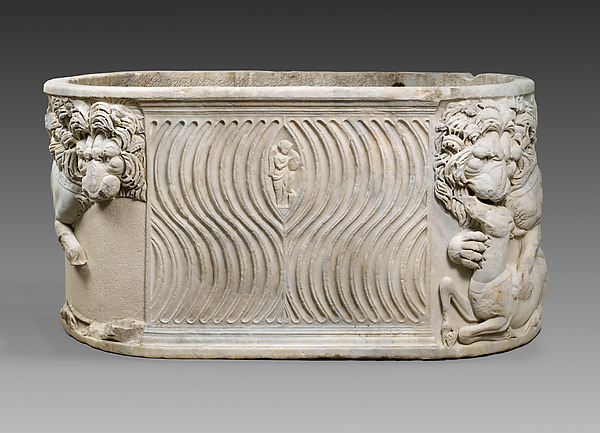
IV / ANOTHER DIMENSION Stone, in the round. The Met offers an actual rotatable 3D scan of this third-century Roman sarcophagus. Open it in the museum’s viewer to explore the carvings from every side.
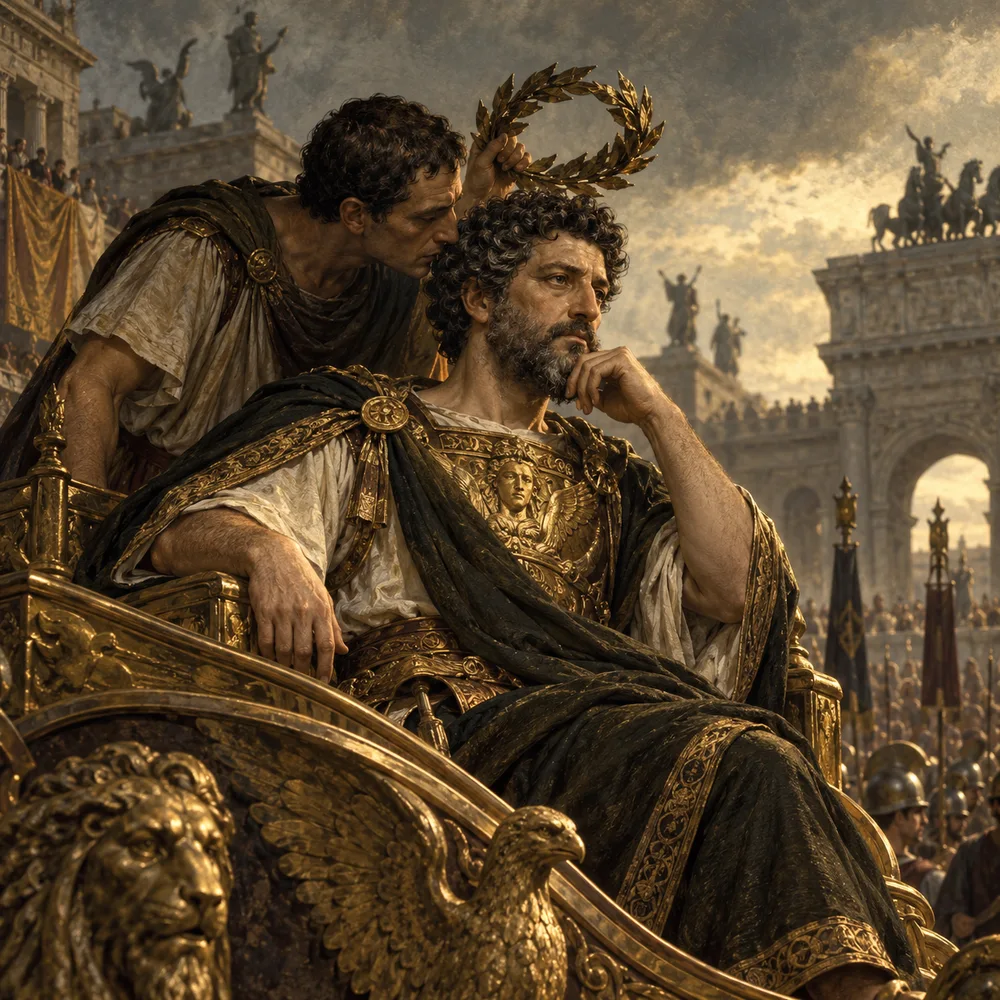
Find the 3D model in the museum record ↗ An imagined scene inspired by the Roman triumph account; the ancient source does not identify Marcus Aurelius. Tertullian, Apology 33 ↗ V / A STOIC NOTE 121–180 CE · ROMAN EMPEROR & PHILOSOPHER
Marcus Aurelius Meditations was written as a series of notes to himself, not as a public manifesto. Its recurring practice is to examine one’s judgments, act justly toward others, and remember how brief a life is. Here his thought opens a space for questions, not borrowed quotations.
Read the Stanford Encyclopedia entry ↗ VI / SACRED TEXTS
From sacred texts. Fourteen passages, kept in their own traditions and gathered around questions of how to live.
The Gospels 05 The Qur’an 09
✦
The Gospels 05 EXCERPTS Where your treasure is, your heart will be there too. Matthew 6:21 ↗ First remove the beam from your own eye; then you will see more clearly to remove the speck from your brother’s eye. Matthew 7:5 ↗ Treat others as you would want them to treat you. Luke 6:31 ↗ What good is it to gain the whole world and lose your life? Mark 8:36 ↗ You will know the truth, and the truth will set you free. John 8:32 ↗ ◈
The Qur’an 09 EXCERPTS Whoever does even an atom’s weight of good will see it. Az-Zalzalah 99:7 ↗ A person will have only what they strive for. An-Najm 53:39 ↗ Do not turn away from people with disdain or walk boastfully on earth. God does not love the arrogant and boastful. Luqman 31:18 ↗ Do not be like those who forgot God and were thereby made to forget themselves. Al-Hashr 59:19 ↗ We created humankind and know what the soul whispers; We are nearer to each person than the jugular vein. Qaf 50:16 ↗ By time, humankind is indeed in loss. Al-Asr 103:1–2 ↗ Throw what is in your right hand and it will swallow what they have made. What they have made is only a magician’s trick; a magician will not succeed, whatever the aim. Ta-Ha 20:69 ↗ Say: “Truth has come and falsehood has vanished. Falsehood is bound to vanish.” Al-Isra 17:81 ↗ Say: “Truth has come; falsehood can neither bring forth anything new nor bring back what was.” Saba 34:49 ↗ The original selection came from the site owner; the added passages follow the linked verse or are short editorial renderings. English text is editorially translated.
VII / REVOLUTION AND ITS LIMITS
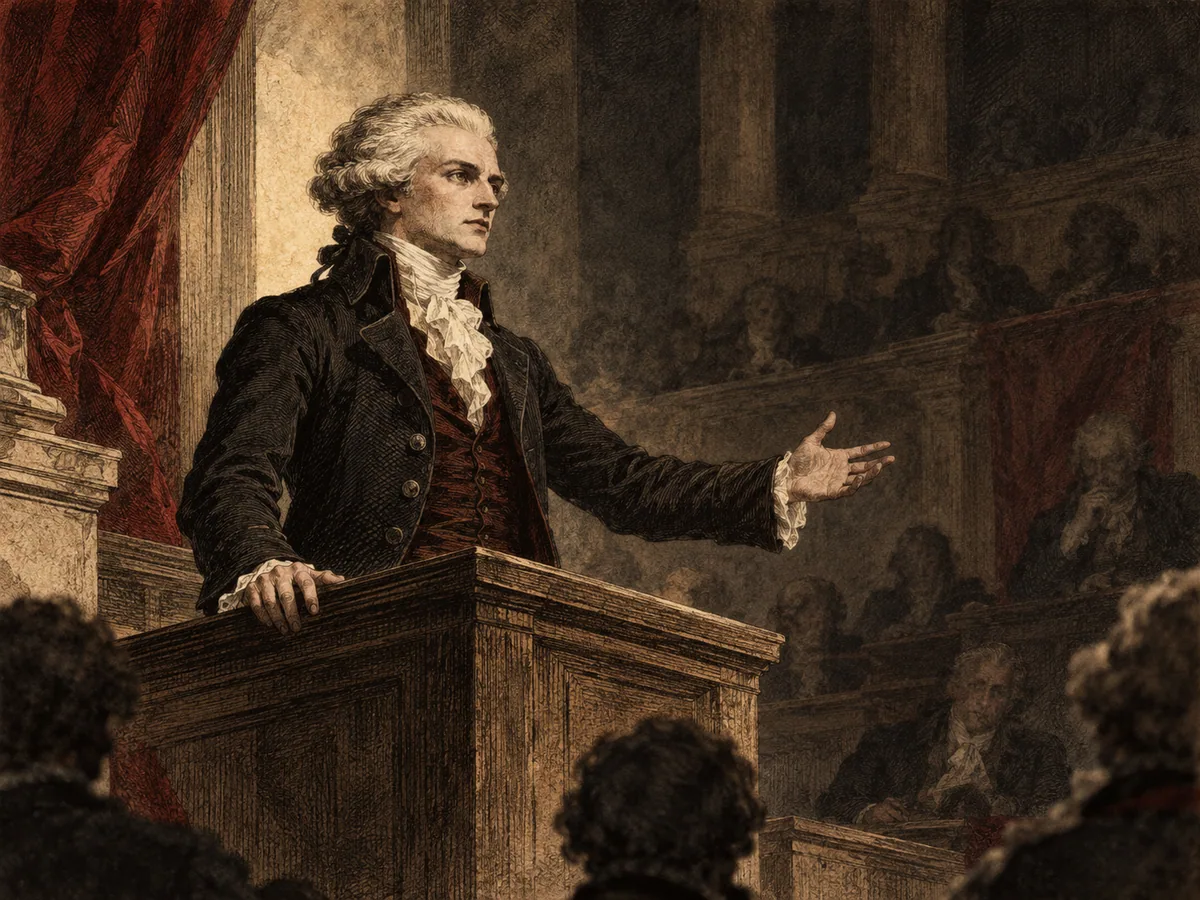
Maximilien Robespierre. Turn the pages to move between an introduction and six passages from his speeches.
1792 1794
OPENING PAGE / 01 The language of revolution Maximilien Robespierre (1758–1794) was a lawyer and a leading political figure of the French Revolution. His arguments for popular sovereignty and equality must also be read alongside the violence of the revolutionary government during the Terror. The following pages bring together six short passages from his speeches of 1792–1794.
French National Assembly biography ↗ Interpretive illustration · not a historical portrait 10 MAY 1793 / 02 Humankind was born for happiness and freedom, yet everywhere it is enslaved and unhappy! Speech on the Constitution ↗ 5 FEBRUARY 1794 / 03 The revolutionary government is the despotism of freedom against tyranny. Principles of Political Morality ↗ 5 FEBRUARY 1794 / 04 If virtue drives popular government in peacetime, revolution is driven by both virtue and terror. Without virtue, terror is disastrous; without terror, virtue is powerless. Principles of Political Morality ↗ 5 FEBRUARY 1794 / 05 What is the goal we seek? The peaceful enjoyment of liberty and equality, and the reign of eternal justice whose laws are engraved in human hearts rather than marble. Principles of Political Morality ↗ 2 DECEMBER 1792 / 06 The first social law is the one that guarantees every member of society the means to exist. Speech on Subsistence and Food ↗ 10 MAY 1793 / 07 Accept that the people are good, and that their representatives can be corrupted. Speech on the Constitution ↗ ← 01 / 07 →
Passages are editorial English renderings of the selected Turkish text; speech links lead to French parliamentary records.
VIII / WORDS BETWEEN WORKS
Thoughts in motion. ← 01 / 34 → Ⅱ
01 / Socrates The unexamined life is not worth living. Plato, Apology 38a ↗ 02 / Gallery reflection You cannot govern an entire day; you can choose where your first attention goes. Original gallery reflection 03 / Epictetus Men are disturbed not by things, but by the views which they take of things. Enchiridion 5 ↗ 04 / Gallery reflection A delay is sometimes an opening to look without haste. Original gallery reflection 05 / Aristotle Looking at an image can also be a way of learning and drawing inferences. Poetics 1448b · paraphrase ↗ 06 / Gallery reflection Name what you cannot control, then find the small action still within reach. Original gallery reflection 07 / Albert Camus I rebel; therefore we exist. The Rebel · 1951 · editorial translation ↗ 08 / Gallery reflection Calm is not feeling nothing; it is not surrendering to a feeling at once. Original gallery reflection 09 / Marcus Aurelius You need no distant retreat to return to your own mind. Meditations 4.3 · paraphrase ↗ 10 / Gallery reflection A good decision cannot guarantee the outcome, but it reveals your character. Original gallery reflection 11 / Marcus Aurelius Do not live as if time were endless; be good while you can. Meditations 4.17 · paraphrase ↗ 12 / Gallery reflection You need not believe every thought; some simply pass through. Original gallery reflection 13 / Albert Camus True generosity toward the future consists in giving everything to the present. The Rebel · 1951 · editorial translation ↗ 14 / Gallery reflection Do not leave today’s needed kindness to tomorrow’s uncertainty. Original gallery reflection 15 / Marcus Aurelius An obstacle can become material for action when you change your approach. Meditations 5.20 · paraphrase ↗ 16 / Gallery reflection Attention is time in an unseen form; life grows where you give it. Original gallery reflection 17 / Marcus Aurelius Look within for the spring of good; keep searching and it can rise again. Meditations 7.59 · paraphrase ↗ 18 / Gallery reflection Looking at a work again is not returning unchanged; you arrive as someone new. Original gallery reflection 19 / Albert Camus No, a person knows how to hold back. That is what being human means. The First Man · spoken by Cormery · editorial translation ↗ 20 / Gallery reflection Do not miss livable moments while waiting for a perfect one. Original gallery reflection 21 / Epictetus Your judgments and actions are yours to govern; reputation and others’ choices are not. Enchiridion 1 · paraphrase ↗ 22 / Gallery reflection Anger’s first sentence need not be your final word. Original gallery reflection 23 / Epictetus Instead of demanding that events follow your wishes, learn to meet them as they come. Enchiridion 8 · paraphrase ↗ 24 / Gallery reflection To revise yourself, you need not belittle who you were. Original gallery reflection 25 / Albert Camus To name something wrongly is to add to the unhappiness of this world. On a Philosophy of Expression · 1944 · editorial translation ↗ 26 / Gallery reflection Trying to understand another person is also a form of courage. Original gallery reflection 27 / Epictetus You may not choose the part you are given; playing it well is your task. Enchiridion 17 · paraphrase ↗ 28 / Gallery reflection Seeing the value in enough does not forbid you to hope for more. Original gallery reflection 29 / Seneca Many fears grow in the mind before the feared event arrives. Moral Letters 13.4 · paraphrase ↗ 30 / Gallery reflection Sometimes one honest conversation lightens the weight of a day. Original gallery reflection 31 / Albert Camus Every generation, doubtless, feels called to remake the world. Mine knows it will not remake it. Nobel banquet speech · 10 December 1957 · editorial translation ↗ 32 / Seneca Whatever someone’s status, see the human being first. Moral Letters 47.1 · paraphrase ↗ 33 / Aristotle Virtue grows through repeated action, not through knowledge alone. Nicomachean Ethics 2.1 · paraphrase ↗ 34 / Personal selection Every whispered doubt bears the shadow cast by the self. Selected by the site owner Socrates and Epictetus open with short sourced excerpts; the other ancient philosophers are freely paraphrased. Five selected Camus passages are interwoven through the sequence in editorial translation; the line from The First Man is spoken by a fictional character. “Gallery reflection” cards are original text. A new card enters from the right every 20 seconds; use the arrows to move sooner. The section’s own button pauses the flow. With reduced-motion preference, the flow starts paused and can be enabled here.
− 100% +
× Antiquity / ca. 590–580 BCE
Marble kouros Attic Greek, artist unknown · Naxian marble
The work This youthful figure, left foot forward and arms at his sides, marked the grave of a young Athenian. The Met notes the influence of Egyptian sculptural poses.
Look closer Look for rhythm rather than naturalism: which lines repeat through the hair, shoulders, and knees?
See the museum record ↗ The Metropolitan Museum of Art · Public Domain / CC0
− 100% +
× Antiquity / ca. 510 BCE
Hydria with Achilles and Ajax Attributed to the Leagros Group · Black-figure terracotta
The work Athena appears between two Trojan War heroes as they play a game. The Met describes the scene as a reinterpretation of an earlier composition by Exekias.
Look closer Where does tension begin between the absorbed players and Athena stepping into their game?
See the museum record ↗ The Metropolitan Museum of Art · Public Domain / CC0
− 100% +
× Antiquity / 2nd century BCE
Marble head of a goddess Greek, artist unknown · Marble
The work The Met connects the oval face and complex hairstyle to images of goddesses and personifications associated with the Great Altar of Zeus at Pergamon.
Look closer How do the missing and weathered surfaces shift your attention from form to feeling?
See the museum record ↗ The Metropolitan Museum of Art · Public Domain / CC0
− 100% +
× Antiquity / 3rd century CE
Marble sarcophagus with lions Roman, artist unknown · Marble
The work The third-century sarcophagus shows lions bringing down antelope. Its museum record also offers an actual rotatable 3D model.
Look closer How do the weight of the stone and the movement across its surface coexist?
See the museum record ↗ The Metropolitan Museum of Art · Public Domain / CC0
− 100% +
× Renaissance / 1480–85
Compositional studies of the Virgin and Child Leonardo da Vinci · Metalpoint and ink on paper
The work Leonardo repeatedly reworks the same scene. The geometric marks at lower right investigate the viewer’s position and perspective.
Look closer Look not for a final answer, but for thought changing direction on paper.
See the museum record ↗ The Metropolitan Museum of Art · Public Domain / CC0
− 100% +
× Renaissance / ca. 1500
Three Miracles of Saint Zenobius Sandro Botticelli · Tempera on wood
The work Botticelli places three miracles of the Florentine saint across one long cityscape. The museum notes a new sense of urgency in the artist’s narratives of this period.
Look closer How do you distinguish three moments inside one image, and which event catches your eye first?
See the museum record ↗ The Metropolitan Museum of Art · Public Domain / CC0
− 100% +
× Renaissance / ca. 1504
Madonna and Child Enthroned with Saints Raphael · Oil and gold on wood
The work Made for the Franciscan convent of Sant’Antonio in Perugia, this altarpiece joins traditional iconography with the fuller figures Raphael was exploring in Florence.
Look closer How does your eye move between the golden light above and the weight of the figures below?
See the museum record ↗ The Metropolitan Museum of Art · Public Domain / CC0
− 100% +
× Renaissance / 1565
The Harvesters Pieter Bruegel the Elder · Oil on oak
The work Part of a cycle of seasons, the painting sets people working, eating, and resting inside an expansive landscape.
Look closer How many kinds of time coexist here: labor, rest, travel, and season?
See the museum record ↗ The Metropolitan Museum of Art · Public Domain / CC0
− 100% +
× Renaissance / 1550s
Venus and Adonis Titian · Oil on canvas
The work In the story told by Ovid, Venus tries to keep Adonis from setting out on a hunt. The museum emphasizes the contrast between the scene’s sensual vitality and the tragedy to come.
Look closer How do the figures’ opposing movements convey the moment of parting?
See the museum record ↗ The Metropolitan Museum of Art · Public Domain / CC0
− 100% +
× Baroque / 1597
The Musicians Caravaggio · Oil on canvas
The work The Met describes the young musicians in a moment of preparation rather than performance. The winged figure is Cupid, making the scene an allegory too.
Look closer Can you imagine the sound of preparation before the music begins?
See the museum record ↗ The Metropolitan Museum of Art · Public Domain / CC0
− 100% +
× Baroque / 1653
Aristotle with a Bust of Homer Rembrandt · Oil on canvas
The work Aristotle rests a hand on Homer’s bust and wears a medallion of his former pupil Alexander. The Met reads the scene as a meditation on worldly success and lasting values.
Look closer As one hand touches the past, where does the gaze travel?
See the museum record ↗ The Metropolitan Museum of Art · Public Domain / CC0
− 100% +
× Thought / 1787
The Death of Socrates Jacques-Louis David · Oil on canvas
The work Inspired by Plato’s Phaedo, David shows Socrates speaking about the soul’s immortality while his students grieve.
Look closer What does the contrast between the calm center and the surrounding grief suggest?
See the museum record ↗ The Metropolitan Museum of Art · Public Domain / CC0
− 100% +
× Renaissance / 1495–1498
The Last Supper Leonardo da Vinci · Dry technique on wall
The work Painted for the refectory of Santa Maria delle Grazie in Milan, Leonardo builds each apostle’s reaction to Jesus’s words through gesture.
Look closer How does your eye travel between the still figure at the center and the motion around him?
See the museum record ↗ Wikimedia Commons · public-domain image ↗
− 100% +
× Renaissance / ca. 1503–1519
Mona Lisa Leonardo da Vinci · Oil on poplar panel
The work In the portrait the Louvre identifies as Lisa Gherardini, softened transitions bring the face and surrounding landscape close together.
Look closer Look beyond the smile to the transition between face and landscape.
See the museum record ↗ Wikimedia Commons · public-domain image ↗
− 100% +
× Renaissance / ca. 1485
The Birth of Venus Sandro Botticelli · Tempera on canvas
The work At the Uffizi, Venus arrives on a shell at the shores of Cyprus; the winds and the welcoming figure set movement in opposing directions.
Look closer Do the hair, cloth, and waves follow the same wind?
See the museum record ↗ Wikimedia Commons · public-domain image ↗
− 100% +
× Renaissance / ca. 1480
Primavera Sandro Botticelli · Tempera on wood
The work Botticelli brings nine figures together in a flower-filled garden. The Uffizi notes that the painting has inspired many interpretations.
Look closer As you move across the figures, do you see one story or several scenes side by side?
See the museum record ↗ Wikimedia Commons · public-domain image ↗
− 100% +
× Renaissance / 1509–1511
The School of Athens Raphael · Fresco
The work At the center of this Vatican fresco, Plato points upward while Aristotle gestures toward the world. Many thinkers share one architectural space.
Look closer How does the direction of thought change as you follow the two central hands?
See the museum record ↗ Wikimedia Commons · CC0 photograph ↗
− 100% +
× Renaissance / ca. 1511
The Creation of Adam Michelangelo · Fresco
The work On the Sistine Chapel ceiling, two hands nearly touch. The Vatican Museums connect the tension in this gap to the transmission of life.
Look closer Would the image feel different if the hands actually met?
See the museum record ↗ Wikimedia Commons · public-domain image ↗